Skin and body perception
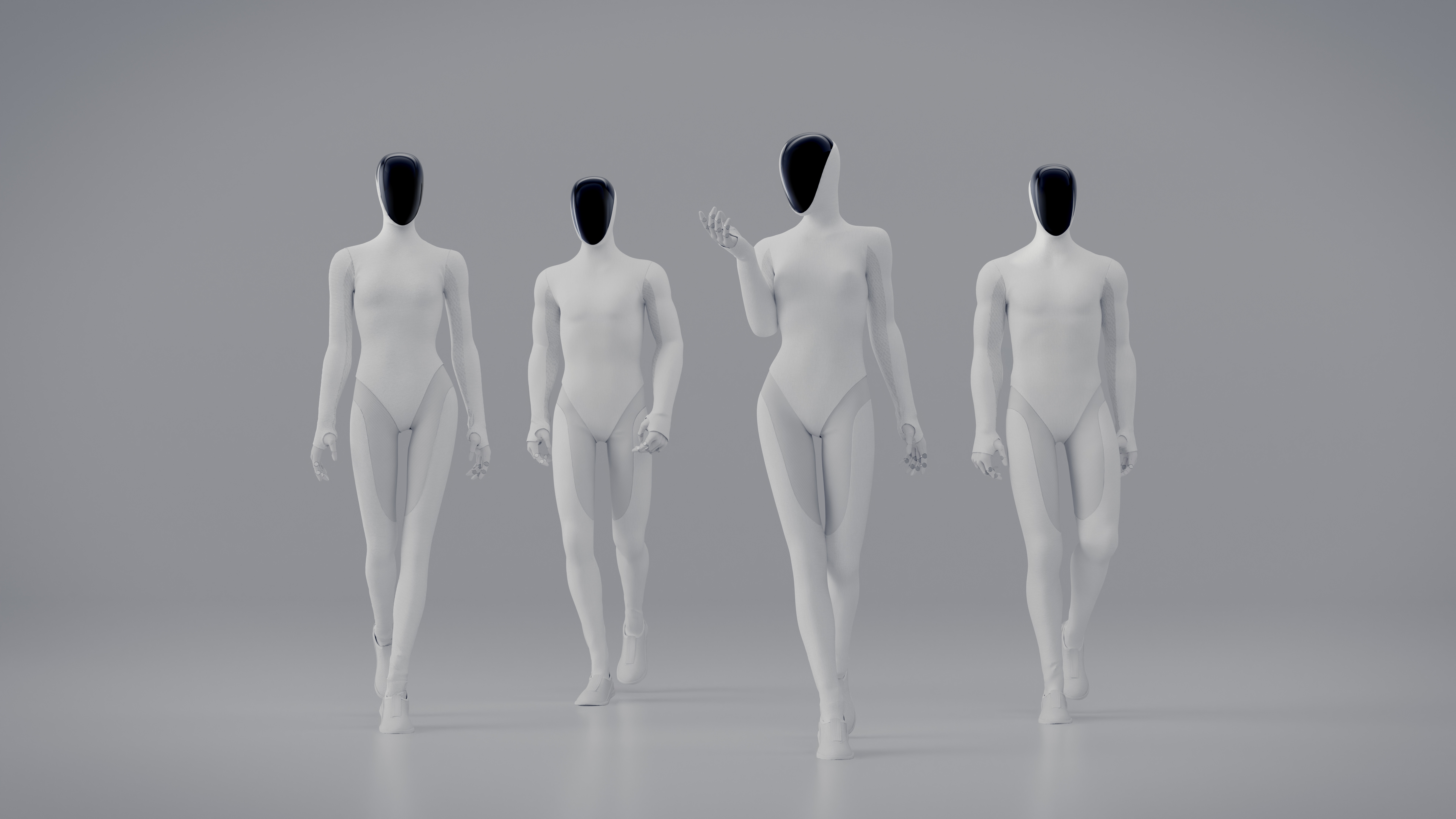
It has a skin-like surface and AI to understand people and space.
Model not named
XPENG
XPENG IRON runs VLM and VLT on top of its own sensing and whole-body control — the parts the 4 public sources on this page actually name.
IRON is described with three named model layers: one that understands what it sees and hears, one that decides the task steps, and one that predicts the physical world and turns that into actions.
What XPENG IRON uses to sense, think, move and learn
Senses
Turns cameras, audio and touch into one picture
Understands
Works out what the job is
Predicts
Anticipates what happens next
Acts
Chooses the movement and the grasp
Controls
Keeps the body balanced while it works
Learns
Improves the models between runs
What it learns feeds back into the models before the next run.
Greyed cards are parts the vendor hasn't named a model for.
01
XPENG also has separate car-side world-model work that is not confirmed to run on IRON itself.
XPENG states IRON combines VLM (vision-language understanding), VLT (Vision-Language-Task reasoning and decision-making) and VLA 2.0, which XPENG describes as both an action-generative model and a physical-world model spanning cars, humanoids and flying vehicles.
4 confirmed as running on the robot
0 supplied by a partner
13 open questions left unanswered
XPENG is architecturally interesting because it discloses VLM/VLT/VLA 2.0 around IRON and separately discloses world-model work. Keep X-World/X-Mind as XPENG physical-AI context unless directly tied to IRON runtime.
02
Four-level chain
Understanding, task reasoning, prediction and action are named as separate models handing off in sequence.
Skin and body perception
It has a skin-like surface and AI to understand people and space.
Model not named
Run the models
IRON likely has strong onboard compute, but exact TOPS should be quoted carefully.
Contact safety
Skin could help contact awareness, but hard safety proof is not public.
Model not named
See and understand language
This is the part that understands what it sees and what people say.
Decide the task steps
VLT is the robot task brain: it decides what job steps make sense.
Predict the world and choose movement
XPENG is trying to make the AI predict the physical world before acting, and this same model turns that understanding into actions.
Move around
The same physical-world AI thinking from cars may help the robot move around.
Hands and manipulation
The body and hands are highly articulated and skin-covered for human-like interaction.
Model not named
Whole-body walking
The body is designed to move more like a person, including spine and foot motion.
Model not named
Physical body
We know the body is complex; motor details are less public.
Not disclosed
Around the stack
Named on the public record, but not part of the runtime chain above.
Car-side world-model context
XPENG may reuse prediction ideas across cars and robots, but we should not claim IRON definitely runs X-Mind or X-World.
Cross-domain learning
XPENG can reuse data and model ideas from cars and robotics to improve physical AI, but this is platform-level evidence, not IRON-specific proof.
03
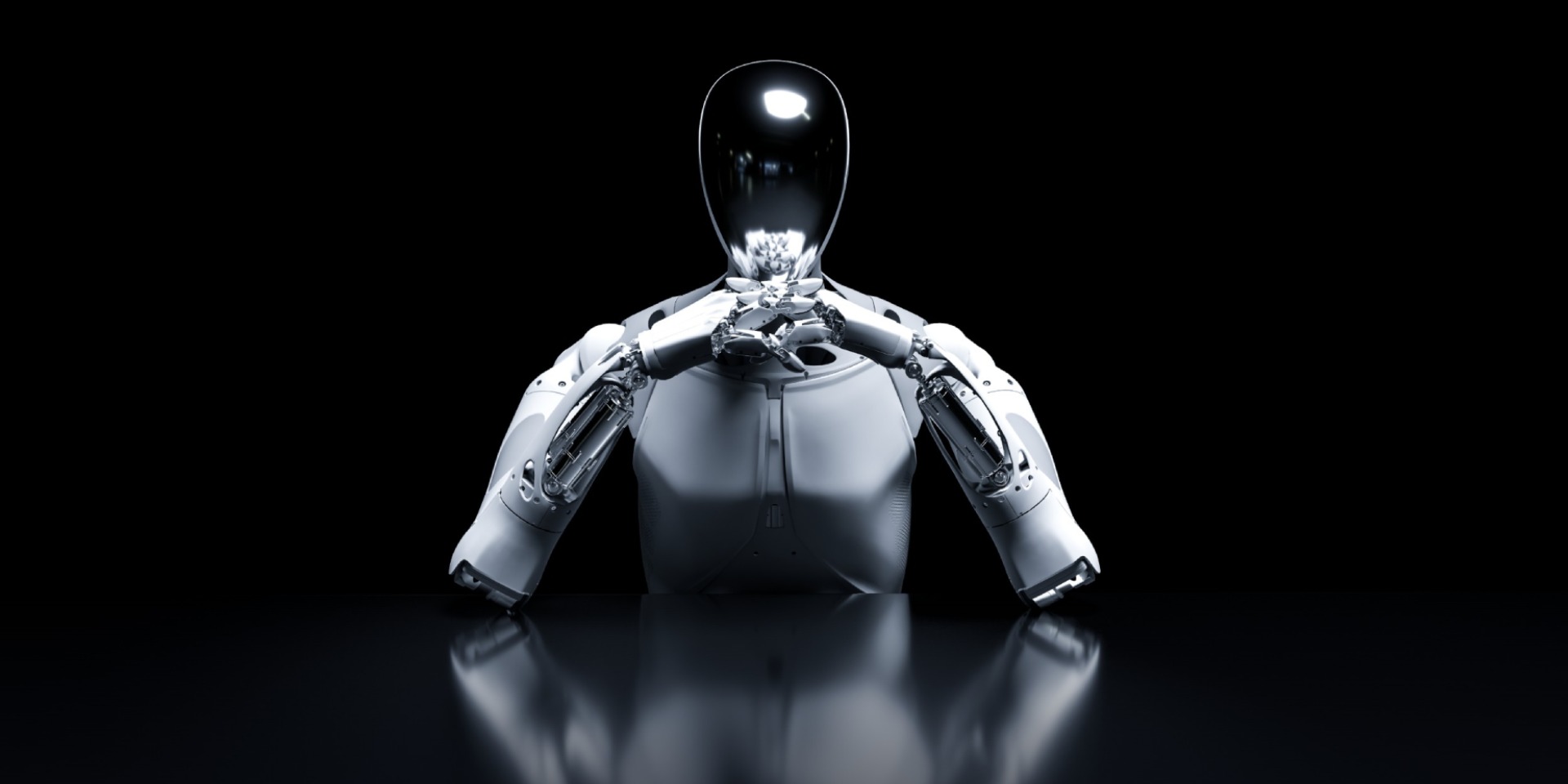
Parts sit on the body only where the public record places them. 1 of 8 entries are still not publicly disclosed.
Electronic skin; exact camera/tactile sensor array not fully listed in text.
Skin/contact is public; full sensor list is not.
Reported for this robot · 1 source
Seamless electronic skin and full-body soft exterior.
Skin-like covering may help safety/contact and human-facing design.
Confirmed on this robot · Across the robot · 1 source
Official XPENG IRON page lists 173 cm and 65 kg.
Human-sized but relatively light for its DoF.
Confirmed on this robot · Across the robot · 1 source
Still open: Some secondary pages list different early prototype specs; use official page for current IRON.
Bionic lumbar spine and bionic forefoot.
Spine and feet are designed to support more natural motion.
Confirmed on this robot · Legs · 1 source
82 DoF full body; 22 DoF per hand.
Very high articulation, especially in the hands.
Confirmed on this robot · Across the robot · 1 source
VLM + VLT + VLA 2.0 described for IRON.
It has named model layers from seeing/talking to task/action.
Confirmed on this robot · 1 source
XPENG Turing AI compute is part of the broader physical-AI story, but exact IRON compute values need careful versioning.
Don't overquote TOPS unless the specific IRON page states it.
Conflicting public disclosures · 1 source
Still open: Need exact product spec.
Not clearly specified in reviewed official IRON page text.
We do not know runtime.
Not publicly disclosed · 1 source
04
Vendor-stated scenario
This walkthrough is a reasoned synthesis of publicly disclosed architecture pieces, not a confirmed end-to-end demo transcript.
01
The robot interprets what the visitor sees and says.
VLM processes visual/language context from the visitor.
Confirmed on this robot · 1 source
02
It converts the request into an ordered task plan.
VLT converts the request into a robot task plan: guide, stop, pick product, hand over.
Confirmed on this robot · 1 source
03
It predicts likely outcomes and picks actions accordingly.
VLA 2.0 generates actions and includes physical-world understanding/prediction.
Confirmed on this robot · 1 source
04
The robot walks across the space toward the display.
Locomotion stack moves IRON through the space.
Autonomous navigation evidence should be tracked.
Confirmed on this robot · 1 source
05
The hand grasps the item using vision, action and touch.
Hand/action system grasps item; electronic skin/contact may support safe interaction.
Grip/tactile resolution not public.
No named model for this moment.
Confirmed on this robot · 2 sources
06
The robot coordinates approach and handover while watching for contact.
Task/action layers coordinate approach and handover, while the contact/safety layer should detect interaction.
Safety details not public.
Cyborgs interpretation · 2 sources
Parts are lit where the vendor's own description puts them to work. Unlit parts still run on the robot; they are simply not what this job turns on.
05
01
The robot works
Runs the parts of the system that later receive updates (1)
02
Experience is captured
Vehicle sensor/simulation data
03
Car-side world-model context
Vendor-stated, pre-production
04
Updates go back on the robot
Predicted future video/action, vehicle-side
Station 04 returns to station 01 — the loop repeats.
XPENG may reuse prediction ideas across cars and robots, but we should not claim IRON definitely runs X-Mind or X-World.
X-World is a controllable generative world model for future video/action simulation; X-Mind/X-Foresight are predictive world-model reasoning for vehicle-side driving. Strongest public evidence is in the vehicle/autonomy context, not confirmed as IRON runtime.
Vendor-stated, pre-production
Does IRON directly use X-Mind/X-World?
What the updates land on
06
A map of the public record, not a verdict. A silent line means the vendor has not said — it never moves the ranking.
Vendor-confirmed
The vendor publicly describes this for the exact robot named on this page.
Reported or contested
Public sources disagree; we show the conflict rather than pick one.
Stated, not shown
The vendor has stated the intent; it has not been shown in a shipped configuration.
The record is silent
The public record does not say. We leave it visible as unknown.
Still open · 03
XPENG has world-model work; direct IRON runtime linkage is not fully established.
Avoids confusing vehicle world model with humanoid runtime.
Current official IRON page has body/DoF details but limited compute/runtime disclosure.
Affects autonomy and deployment practicality.
Public claims and demos need evidence classification separately from architecture disclosure.
Architecture is impressive but ranking needs proof.
07
The record
Every row is the public position. Undisclosed rows stay in the list.
08
4 primary sources sit behind this page. Where they stop, the page says so.
Vendor
The ranking measures demonstrated capability. This page explains the public system behind it. The system description does not affect the score.
Return to the XPENG IRON report →