See and hear
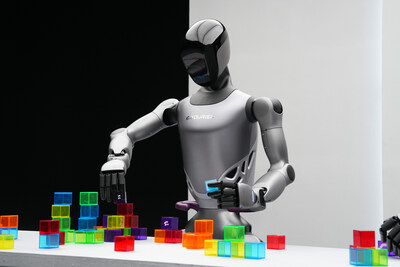
GR-2 has a head with cameras, microphones and speakers, and it can also work with external cameras plugged in by developers.
Model not named
Fourier Intelligence
Fourier GR-2's vendor has not publicly named the models behind it, so this page sets out what is disclosed: the sensing, control and hardware, with the evidence for each part.
GR-2 is a highly articulated humanoid body that developers can control directly, or drive by hand using a VR/teleoperation system to record examples for training robot-learning models later.
What Fourier GR-2 uses to sense, think, move and learn
Senses
Turns cameras, audio and touch into one picture
Understands
Not disclosed
Predicts
Not disclosed
Acts
Chooses the movement and the grasp
Controls
Keeps the body balanced while it works
Learns
Improves the models between runs
What it learns feeds back into the models before the next run.
Greyed cards are parts the vendor hasn't named a model for.
01
Fourier does not publicly name an onboard model that runs the robot autonomously.
GR-2 hardware (53 DoF, FSA 2.0 actuators, self-developed dexterous hands, head perception/voice modules) is exposed through an open developer stack. Fourier's F.A.R.T.S. teleoperation system uses VR and hand tracking to pilot the robot and log demonstration data for imitation learning and VLA training, run externally to the base documentation.
2 confirmed as running on the robot
0 supplied by a partner
10 open questions left unanswered
Fourier GR-2 is more open/developer-platform oriented than consumer autonomy. Its public documentation centres on hardware, SDK and a teleoperation/data-collection system that can feed future imitation-learning or VLA training — it does not disclose a bundled autonomous brain for GR-2 itself.
02
Single integrated stack
The vendor describes one stack rather than separate reasoning and control models.
See and hear
GR-2 has a head with cameras, microphones and speakers, and it can also work with external cameras plugged in by developers.
Model not named
Developer / Fourier Intelligence
Stay within limits
Safety around people needs developer or operator setup; a detailed certified safety stack is not laid out in the reviewed docs.
Not disclosed
Developer / third party
Decide what to do
GR-2 documentation does not include a built-in planning brain — that piece is left to developers or external AI models.
Not disclosed
Human drives the robot
A person wears a VR headset and hand-tracking gear to pilot GR-2's arms and hands in real time — this is direct human control, not autonomy.
Move the body
GR-2's body has many joints and Fourier's own actuators that turn control commands into motion, whether the commands come from a developer, teleoperator or (in future) a trained policy.
Model not named
Grip and feel
GR-2's hands are built for detailed grasping and, in some configurations, can sense touch.
Model not named
Developer tools
GR-2 is positioned as an open platform for labs and developers to build and test their own robot software on.
Model not named
Predict what may happen
No public 'imagine possible futures' model is named for GR-2.
Not disclosed
Around the stack
Named on the public record, but not part of the runtime chain above.
Record the demonstration
While the human pilots the robot, the system saves video, robot state and actions as a training example. This happens alongside teleoperation, not as autonomous behaviour.
Model not named
Developer / third party
Train a skill offline
A developer takes the recorded demonstrations and trains a robot-learning model outside of GR-2 itself. GR-2 does not do this training onboard.
Model not named
03
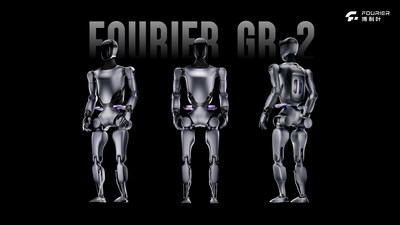
Parts sit on the body only where the public record places them. 1 of 8 entries are still not publicly disclosed.
Head includes visual perception modules, voice interaction modules and speakers.
It can see and interact by voice and audio.
Confirmed on this robot · Head · 1 source
1.75 m height and 63 kg weight from Fourier documentation.
It is roughly adult-human sized and a moderate weight.
Confirmed on this robot · Across the robot · 1 source
Self-developed dexterous hands; 12-DoF tactile-hand support referenced in teleop documentation.
The hands are designed for dexterity, with touch sensing possible depending on configuration.
Confirmed on this robot · Hands · 2 sources
Still open: Exact standard hand/tactile configuration needs confirmation.
Up to 53 degrees of freedom across the body.
Many joints allow complex, human-like movement.
Confirmed on this robot · Across the robot · 1 source
FSA 2.0 actuator system.
Fourier's upgraded actuators act as the robot's muscles.
Confirmed on this robot · Across the robot · 1 source
VR headset, hand tracking and camera support (e.g. OAK, RealSense, generic USB) in the Fourier teleoperation system.
Equipment that lets a human control the robot and record demonstrations.
Confirmed on this robot · 1 source
Robot main computer is in the torso; exact chip/TOPS figures are not public in the reviewed introduction.
It has onboard computing, but the exact chip is not disclosed.
Not publicly disclosed · Torso · 1 source
Secondary sources mention roughly 2 hours of runtime; not present in the extracted official introduction text.
Treat battery life as unverified until confirmed on an official spec sheet.
Reported for this robot · 1 source
Still open: Official battery spec needed.
04
Developer/training workflow
This walkthrough describes a teleoperated data-collection and offline-training workflow, not an autonomous product task. A human directly pilots the robot in steps 2–3, and any resulting trained skill in steps 4–6 is external, developer-run and not confirmed as a shipped GR-2 autonomy feature. Nothing here should be read as evidence of autonomous capability.
01
A developer configures GR-2's head sensors and any external camera streams and connects to the robot.
Developer configures camera streams and the robot connection ahead of a teleoperation session.
No named model for this moment.
Confirmed on this robot · 2 sources
02
An operator uses the F.A.R.T.S. VR headset and hand tracking to directly control GR-2's arms and hands.
Operator input from VR/hand tracking is converted in real time into arm and hand commands.
This is direct teleoperation, not autonomous behaviour.
Confirmed on this robot · 1 source
03
The teleoperation system logs images, robot state and the operator's actions during the pick.
System records images, robot state and actions for later imitation-learning or VLA training.
No named model for this moment.
Confirmed on this robot · 1 source
04
A developer trains an imitation-learning or VLA policy on the recorded demonstrations, outside GR-2's base documentation.
Developer trains a policy on demonstration data using external tooling; no Fourier-shipped GR-2 policy is named.
The trained model, and whether it works, is entirely developer responsibility and not vendor-confirmed for GR-2.
No named model for this moment.
Cyborgs interpretation · 1 source
05
If a developer chooses to deploy the trained policy, it would send actions to GR-2's joints and hands via the existing controllers.
A hypothetical trained policy would send actions to GR-2 joints/hands; lower-level controllers would execute them.
No public evidence confirms GR-2 running an autonomous policy trained this way; this step is a plausible extension, not a demonstrated capability.
No named model for this moment.
Cyborgs interpretation · 2 sources
06
Additional demonstrations and failures collected during teleoperation feed back into training and developer tooling.
Failures and new demonstrations are collected and fed back into the training/developer setup.
No named model for this moment.
Cyborgs interpretation · 2 sources
Parts are lit where the vendor's own description puts them to work. Unlit parts still run on the robot; they are simply not what this job turns on.
05
01
The robot works
Runs the parts of the system that later receive updates (3)
02
Experience is captured
Teleop video · Robot state · Teleop commands
03
Record the demonstration
Confirmed on this robot
04
Updates go back on the robot
Stored demonstration trajectories
Station 04 returns to station 01 — the loop repeats.
While the human pilots the robot, the system saves video, robot state and actions as a training example. This happens alongside teleoperation, not as autonomous behaviour.
The Fourier teleoperation stack logs images, robot state and executed actions during piloted sessions for later use in imitation learning or VLA training.
Confirmed on this robot
Scale and quality of any public dataset built this way are unclear.
What the updates land on
06
A map of the public record, not a verdict. A silent line means the vendor has not said — it never moves the ranking.
Vendor-confirmed
The vendor publicly describes this for the exact robot named on this page.
Reported or contested
A secondary source reports this for the exact robot; the vendor has not stated it directly.
Context and interpretation
A Cyborgs reading of the public record, not a vendor statement.
The record is silent
The public record does not say. We leave it visible as unknown.
Still open · 03
Public documentation focuses on hardware and developer tools; no bundled autonomous brain is named.
Separates the platform's data-collection potential from proven autonomous robot intelligence.
A 12-DoF tactile hand is mentioned in teleoperation material but is configuration-specific.
Manipulation claims depend heavily on which hand configuration a given unit ships with.
GR-2 is strong for research and teleoperated data collection; proof-based assessment should credit only demonstrated behaviours, not platform potential.
GR-2 may be an excellent research/data-collection foundation without any proven autonomous product behaviour.
07
The record
Every row is the public position. Undisclosed rows stay in the list.
08
3 primary sources sit behind this page. Where they stop, the page says so.
Vendor
Media
The ranking measures demonstrated capability. This page explains the public system behind it. The system description does not affect the score.
Return to the Fourier GR-2 report →