See and feel
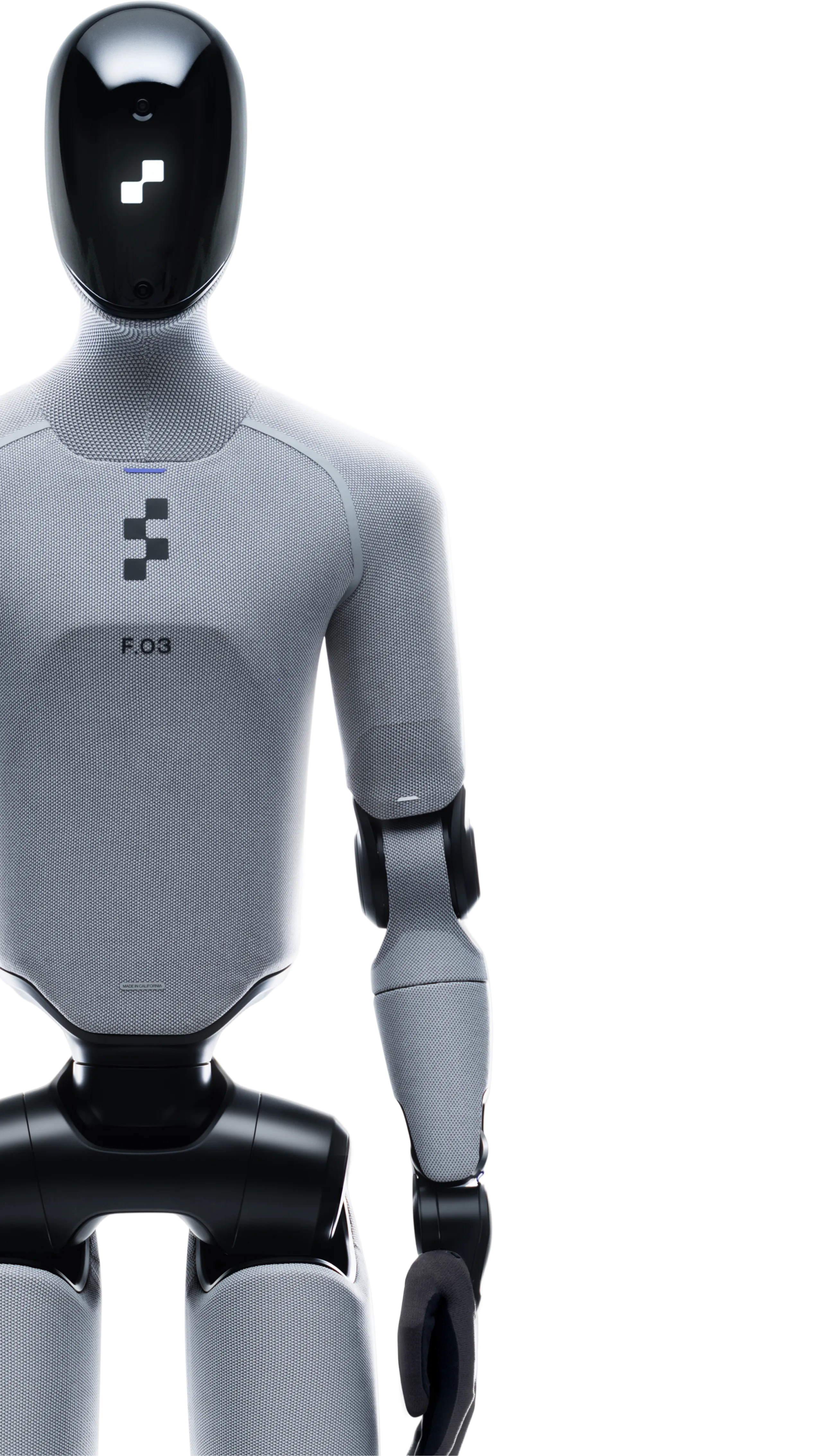
It uses eyes in the head, eyes in the hands, touch in the fingers and a sense of its own body position.
Model not named
Figure AI
Figure 03 runs Helix System 2 and Helix System 1 on top of its own sensing and whole-body control — the parts the 3 public sources on this page actually name.
Figure uses a three-layer system: one layer understands the job, one turns everything the robot sees and feels into movement, and one handles fast balance and actuator control.
What Figure 03 uses to sense, think, move and learn
Senses
Turns cameras, audio and touch into one picture
Understands
Works out what the job is
Predicts
Not disclosed
Acts
Chooses the movement and the grasp
Controls
Keeps the body balanced while it works
Learns
Improves the models between runs
What it learns feeds back into the models before the next run.
Greyed cards are parts the vendor hasn't named a model for.
01
Figure uses a three-layer system: one layer understands the job, one turns everything the robot sees and feels into movement, and one handles fast balance and actuator control.
Helix System 2 provides semantic reasoning, System 1 produces full-body joint targets at 200 Hz, and System 0 executes at 1 kHz.
6 confirmed as running on the robot
0 supplied by a partner
13 open questions left unanswered
Figure has one of the cleanest public layer disclosures: Helix 02 maps directly onto a reasoner, an action policy and a whole-body controller. It does not publicly centre a separate world model.
02
Three-level hierarchy
A slow reasoning layer drives a faster policy, which drives the control loop.
See and feel
It uses eyes in the head, eyes in the hands, touch in the fingers and a sense of its own body position.
Model not named
Stay within limits
The body is being made safer and easier to live with.
Model not named
Understand the job
This is the part that understands the instruction and the situation, and decides the next sensible step.
Choose movement
This is the fast action brain: what should the arms, legs, torso and hands do right now?
Handle objects by touch
The robot can use hand cameras and touch when its head cannot see the object properly.
Model not named
Navigate and use skills
It does not only stand and pick — it walks around the room while it works.
Control the body
This is the balance and reflex layer that keeps movement smooth and stable.
Run the models
The reviewed official pages do not say what compute is on board.
Not disclosed
Predict what may happen
No separate 'imagine possible futures' model is publicly named for this robot.
Not disclosed
Physical body
The models connect all the way down to the body itself.
Model not named
Around the stack
Named on the public record, but not part of the runtime chain above.
Improve the models
The robot's models learn from human movement and from simulation before real use. This happens off the robot, not while it is working.
Model not named
03
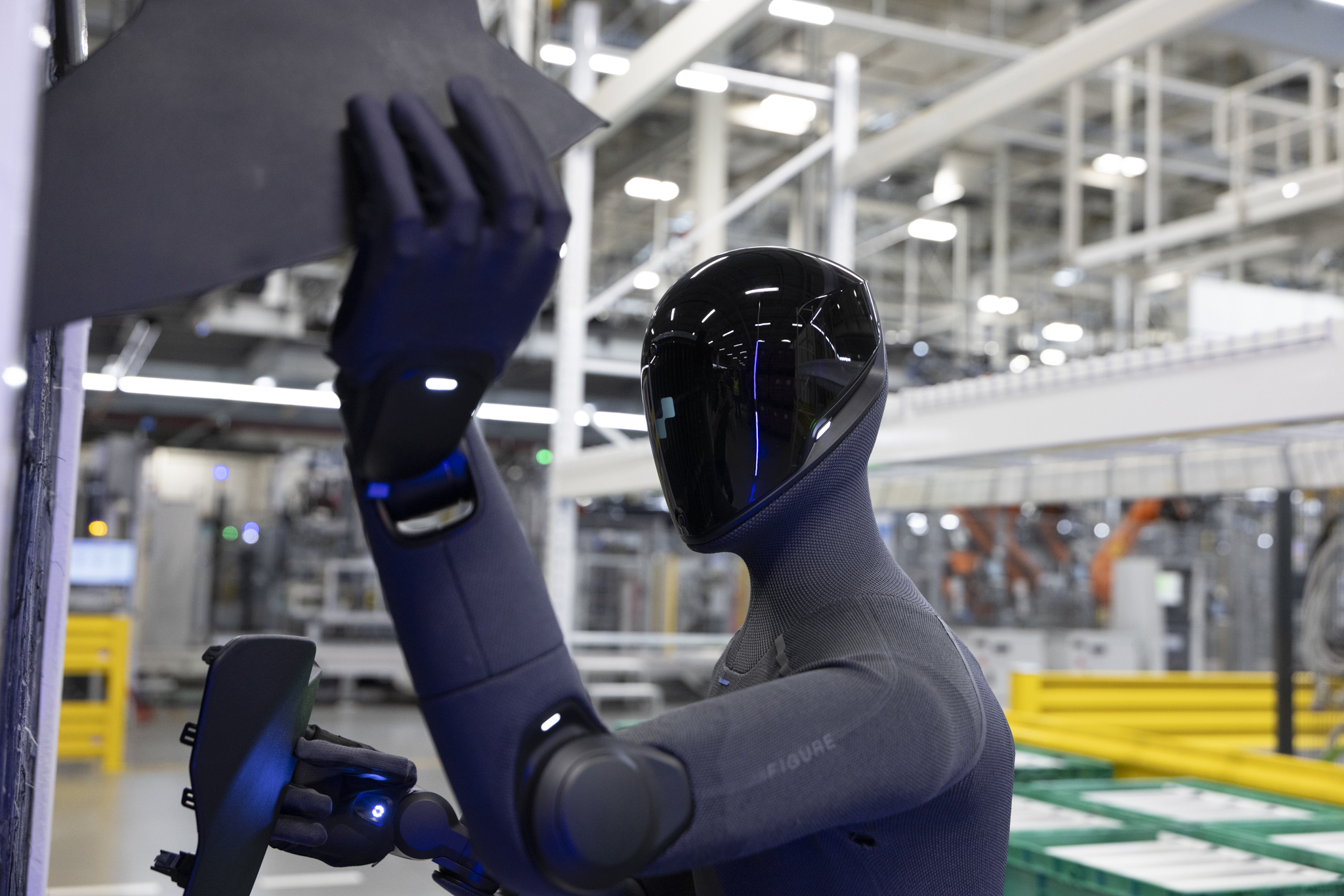
Parts sit on the body only where the public record places them. 1 of 9 entries are still not publicly disclosed.
Redesigned camera architecture: twice the frame rate, a quarter of the latency and 60% wider field of view per camera versus the previous generation.
Better eyes give the action model faster and wider vision.
Confirmed on this robot · Head · 1 source
Improved audio system for voice interaction and reasoning.
Better microphones and speakers for talking to the robot.
Confirmed on this robot · 1 source
Fingertip tactile sensing feeds the action policy directly.
Touch is an input to the movement brain, not a separate add-on.
Confirmed on this robot · Hands · 1 source
Full-body proprioception feeds System 1 and System 0.
The robot knows where its own limbs are while it works.
Confirmed on this robot · Across the robot · 1 source
Palm cameras and custom fingertip tactile sensors; touch sensitivity as small as 3 g claimed.
The hands can see close up and feel very small contact forces.
Confirmed on this robot · Hands · 2 sources
System 1 outputs full-body joint targets; System 0 tracks them at 1 kHz.
The fast brain sends body targets and the reflex brain executes them smoothly.
Confirmed on this robot · Across the robot · 1 source
Not disclosed on the reviewed Figure 03 and Helix pages.
We do not know the onboard compute from official material.
Not publicly disclosed · 2 sources
UN38.3-certified battery with safety layers; wireless inductive charging.
A safer battery pack, and charging without plugging in manually.
Confirmed on this robot · 1 source
Still open: Runtime and capacity are not stated.
Soft goods, multi-density foam coverings and home-oriented materials.
A softer exterior for working close to people at home.
Confirmed on this robot · 1 source
04
Controlled demonstration
This task has been shown in a controlled setting. That is different from repeated production deployment.
01
The robot interprets the request and the kitchen scene.
System 2 interprets the language instruction together with the scene.
Confirmed on this robot · 1 source
02
It breaks the job into an ordered set of steps.
System 2 emits semantic goals — walk to the dishwasher, open the rack, pick a bowl, carry it to the cabinet.
Confirmed on this robot · 1 source
03
It moves across the kitchen while using its arms.
System 1 outputs full-body joint targets at 200 Hz; System 0 executes balance and contact at 1 kHz.
Confirmed on this robot · 1 source
04
It grasps items the head cameras cannot see clearly.
Palm-level vision and fingertip touch regulate the grasp when the head view is blocked.
No named model for this moment.
Confirmed on this robot · 2 sources
05
It keeps the object stable while walking.
The full-body policy and controller adjust legs, torso and arms as the carried object changes the balance.
Confirmed on this robot · 1 source
06
It puts the item in the right place.
System 2 specifies the destination; System 1 and System 0 execute the placement.
Confirmed on this robot · 1 source
07
It runs the sequence continuously rather than performing one isolated action.
The public demonstration describes a four-minute continuous task with no resets or human intervention.
External and deployment repeatability evidence is still needed.
Controlled demonstration · 1 source
Parts are lit where the vendor's own description puts them to work. Unlit parts still run on the robot; they are simply not what this job turns on.
05
01
The robot works
Runs the parts of the system that later receive updates (2)
02
Experience is captured
Human motion · Simulation · Robot fleet data
03
Improve the models
Confirmed on this robot
04
Updates go back on the robot
Updated System 0 and System 1 policies
Station 04 returns to station 01 — the loop repeats.
The robot's models learn from human movement and from simulation before real use. This happens off the robot, not while it is working.
Helix System 0 uses retargeted human motion plus simulation and reinforcement learning; Figure positions Figure 03 as built to learn from humans, with BotQ as the manufacturing and fleet direction.
Confirmed on this robot
Data scale and model update cadence are not public.
What the updates land on
06
A map of the public record, not a verdict. A silent line means the vendor has not said — it never moves the ranking.
Vendor-confirmed
The vendor publicly describes this for the exact robot named on this page.
The record is silent
The public record does not say. We leave it visible as unknown.
Still open · 03
Figure has not publicly disclosed a standalone world model.
Helix is a strong stack, but it is not the same thing as a JEPA, Cosmos or 1X-style world model.
Figure shows strong demonstrations; customer and home field evidence is still emerging.
A controlled demonstration is not the same as production reliability.
Official pages describe sensory and control advances but not every specification.
Readers will ask for dimensions, battery, compute and payload.
07
The record
Every row is the public position. Undisclosed rows stay in the list.
08
3 primary sources sit behind this page. Where they stop, the page says so.
Vendor
The ranking measures demonstrated capability. This page explains the public system behind it. The system description does not affect the score.
Return to the Figure 03 report →